





5 Ways Alumina Ceramic Plates Keep Heavy Industry Running
1. Introduction: Forget the Flower Vase
Ceramics. The word conjures images of dinnerware, bathroom tiles, perhaps a decorative vase that shattered when it met the floor. Fragile, ornamental, easily replaced. Industrial alumina ceramics bear almost no resemblance to that picture.
This material scratches glass as readily as glass scratches plastic, endures furnace temperatures that reduce structural steel to a liquid state, and outlasts cast iron piping by years in applications involving high-velocity abrasive particles. You have likely never encountered a piece of it directly—it resides inside equipment enclosures, bolted behind access panels, positioned in locations that maintenance crews visit only during annual shutdowns. Yet if every alumina ceramic plate were removed from global industrial infrastructure tomorrow, the cost of countless consumer goods would rise dramatically, and some would simply cease to be available.
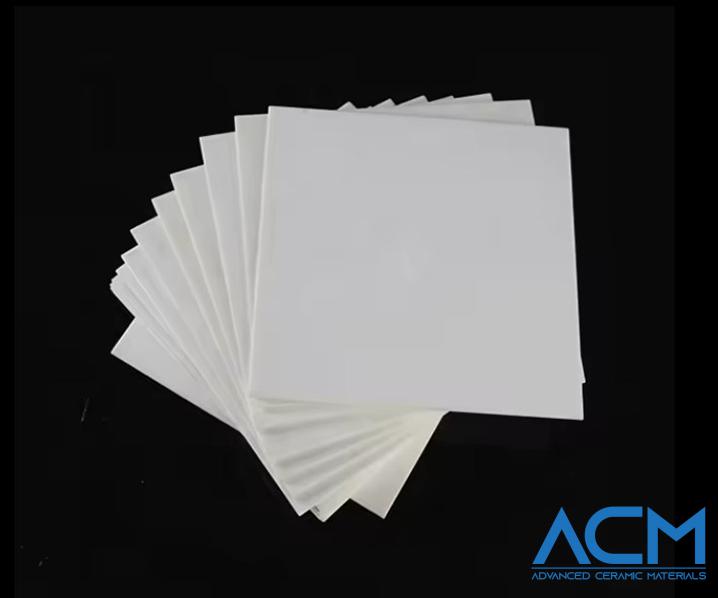
2. High-Temperature Refractories and Abrasion Protection
Heavy industry imposes conditions that most materials cannot tolerate. Alumina ceramic plates address two distinct but equally punishing challenges: sustained extreme heat and continuous abrasive wear.
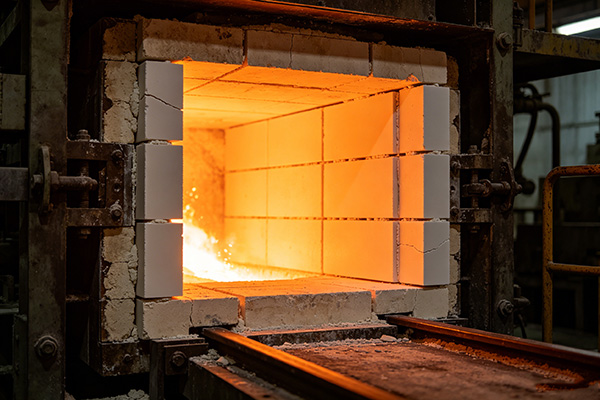
Furnace Linings and Thermal Barriers
Walk into a steel mill or glass plant and the environment announces itself immediately—radiant heat, the glow of molten material, furnace doors cycling open and admitting cold air that conventional refractories struggle to handle. Most lining materials withstand the peak temperatures adequately, but thermal cycling takes a cumulative toll. Heat expands, cooling contracts, cracks initiate and propagate, and eventually sections spall away, forcing unscheduled outages for patching and repair.
Alumina plates behave differently. Their low coefficient of thermal expansion minimizes internal stress during temperature swings, while their relatively high thermal conductivity distributes heat evenly rather than permitting localized hot spots to develop. Installed in the most demanding locations—burner blocks, tap-hole surrounds, transition zones between furnace sections—they extend campaign life substantially. Not indefinitely, of course, but sufficiently to transform maintenance planning from crisis response to scheduled intervention.、
Wear Liners for Slurry Pipelines and Pneumatic Conveying
Consider now an entirely different operational environment. Mining operations, copper processing facilities, and oil sands extraction plants move abrasive slurries through steel pipelines at velocities that erode unprotected surfaces rapidly. Particles traveling at several meters per second act as continuous sandblasting media against the interior of every elbow, bend, and junction. A standard carbon steel joint may wear through in less than two months of continuous service. Welded repairs provide temporary relief at best.
Bonding alumina tiles to the inner wall of these pipe sections changes the equation entirely. The same elbow that failed quarterly now remains in service for years. The economics are direct: an upfront investment in ceramic lining, perhaps ten thousand dollars per critical joint, avoids hundreds of thousands in replacement parts, labor, production downtime, and safety-related incidents over the equipment's extended operational life.
3. High-Speed Machining and Cutting Tools
The evolution of metal cutting has been defined by incremental improvements in tool material performance. Carbide inserts represented a major advance decades ago, but they operate within fundamental limits that alumina ceramics transcend.
Hot Hardness and Extended Tool Life
Carbide tools perform reliably across a broad range of applications, yet they encounter an inherent constraint around 800°C. At that temperature, the cobalt binder phase begins to soften, the cutting edge loses its precise geometry, friction increases, and surface finish deteriorates. Operators must either reduce feed rates or replace inserts at frequent intervals, both of which reduce productivity.
Alumina inserts maintain their cutting capability at temperatures that would anneal high-speed steel and render carbide ineffective. This property, known as hot hardness, allows spindle speeds to reach levels previously considered impractical. Finishing passes on hardened steels, cast irons, and nickel-based superalloys proceed faster and produce superior surface quality with alumina, frequently without any coolant application. (Directing liquid onto a 1000°C insert often causes more harm than benefit, as thermal shock induces micro-cracking along the cutting edge.)
Operational Limitations and Proper Application
The material has trade-offs that must be respected. Alumina fails by chipping rather than gradual wear, performs poorly in interrupted cutting conditions, cannot accommodate heavy depths of cut, and demands a rigid machine tool with a securely fixtured workpiece. Any vibration or instability will shatter the brittle edge. However, with correct setup and appropriate application selection, it outperforms competing materials within its price class—a calculation that experienced shop floor personnel make daily.
4. Dimensional Stability for Precision Fixtures and Metrology
Precision manufacturing faces an adversary that is invisible, persistent, and often underestimated: temperature variation across the production environment.
The Thermal Expansion Problem
Visit any large machining or assembly facility and you will observe granite surface plates, steel fixtures, and cast-iron mounting blocks in daily use. These tools perform adequately under stable conditions. But measure a steel fixture at the start of a shift and again several hours later, and the dimension has changed by several microns. That magnitude seems negligible until tolerances on aerospace components or medical implants enter the picture—at which point it determines whether a part meets specification or lands in the scrap bin.
Steel expands approximately 12 parts per million per degree Celsius. Aluminum expands roughly 23. In precision work, even a 1°C ambient shift translates into measurable dimensional error.
Alumina as a Reference Material
Alumina addresses this challenge through exceptionally low thermal expansion—approximately 5 parts per million per degree Celsius, roughly one-third that of steel. It also exhibits negligible mechanical creep under sustained clamping loads, resists staining from coolants and solvents, and maintains surface flatness over years of service. Machinists employ it for reference surfaces on coordinate measuring machines, locating blocks for high-tolerance fixtures, and mounting plates beneath laser tracking systems.
The material does not resolve every precision challenge, but it eliminates a category of errors inherent to metallic tooling. For operations holding single-digit micron tolerances, that capability is not merely convenient—it is essential.
5. Electronics Thermal Management and Semiconductor Manufacturing
Two of the most demanding industrial sectors rely on alumina ceramics for entirely different reasons: thermal management in power electronics and contamination control in semiconductor fabrication.
Insulating Substrates for EV Power Modules
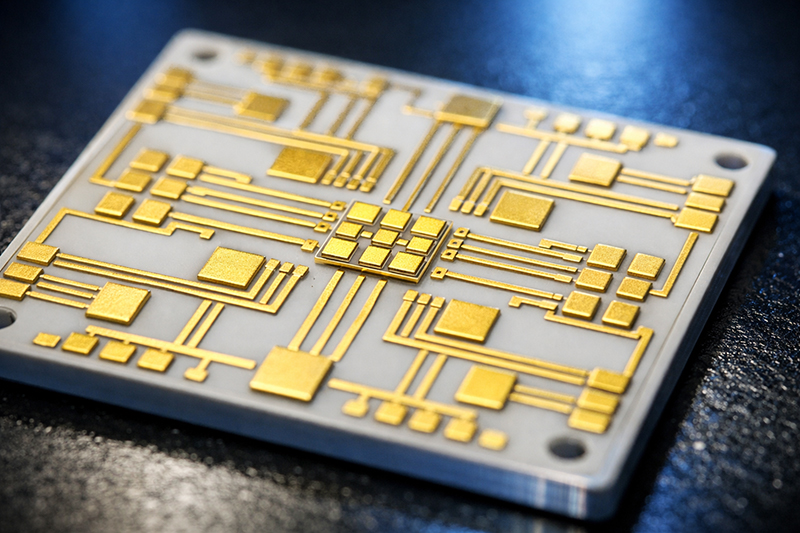
Modern electric vehicles charge at increasingly high rates, and the current flowing into battery packs must pass through power modules that generate substantial heat. The substrate beneath these components must serve two contradictory functions—conduct thermal energy away efficiently while providing complete electrical isolation. Alumina circuit boards satisfy both requirements.
Thin alumina plates positioned directly under IGBTs and silicon-carbide MOSFETs draw junction temperatures downward while preventing any electrical path to the grounded heat sink below. Exceed the thermal limit and the semiconductor derates; push further and it fails catastrophically. Alumina provides the thermal margin that keeps traction inverters operating reliably through repeated fast-charging cycles, particularly during summer conditions or sustained high-load operation.
Contamination-Free Handling in Chip Fabs
Semiconductor fabrication presents an entirely different constraint: particulate contamination. Chip manufacturing occurs in cleanroom environments where a single micron-sized particle can render an expensive wafer unusable, and the robotic systems that transport wafers must endure aggressive plasma cleaning cycles.
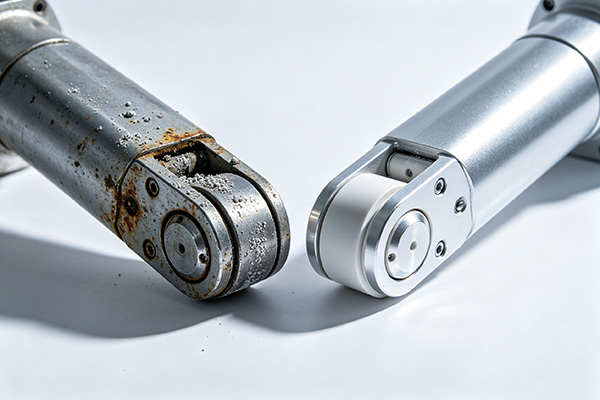
Aluminum end-effectors corrode under these conditions. Polymers outgas and deposit residues. Stainless steel generates particles over time. Alumina does none of these things—it withstands plasma exposure without surface degradation, sheds no debris, remains chemically inert, and maintains its mechanical properties through thousands of cleaning cycles. For process engineers managing yields measured in single-digit percentage improvements, that unremarkable reliability is precisely what justifies the material's selection.
6. Ballistic Protection Through Controlled Fracture
Protective armor might intuitively be associated with toughness—the capacity to bend, absorb, and deflect impact energy. Ceramic armor operates according to a counterintuitive principle: it succeeds by failing.
The Mechanism of Ceramic Armor
When a high-velocity penetrator strikes an alumina strike face, the ceramic fractures locally at the impact point. This controlled shattering process accomplishes several things simultaneously. It grinds down the projectile tip, eroding its penetrating capability. It spreads kinetic energy across a broader area of the backing layer. It forces the remaining projectile debris to engage the full cross-section of the soft backing material—typically aramid or ultra-high-molecular-weight polyethylene—which captures what remains.
The plate is expended after a single hit. But the individual or vehicle behind it survives an event that would otherwise be fatal.
Hardness Versus Toughness
Hardness matters more than toughness in this application. The harder the strike face, the more effectively it disrupts the projectile before the backing layer must absorb residual energy. Boron carbide offers lighter weight for equivalent protection levels. Silicon carbide provides greater hardness. But alumina occupies a favorable position on the cost-performance spectrum—effective against the relevant threats, affordable for volume procurement, stable in long-term storage, and manufactured through well-established industrial processes. It may not be the most sophisticated armor material available, but it equips more personnel and vehicles than any alternative.
7. Summary
Alumina ceramic plates will not appear on any factory tour. They reside inside furnace walls, behind pipeline elbows, within machine tool turrets, beneath coordinate measuring machines, inside electric vehicle inverters, and incorporated into ballistic armor systems. Applications differ. Industries differ. Abuse cases differ. Yet the rationale for selection consistently returns to the same fundamental characteristics: hardness, heat resistance, dimensional stability, and chemical inertness.
The material is neither remarkable in appearance nor novel in composition. It performs its functions without fanfare and requires replacement only at intervals measured in years. Typically, the same maintenance personnel who installed the previous set attend to the replacement, and their awareness of the material arises primarily when it fails. When it works, no one gives it a second thought. That anonymity, in industrial settings, is the highest compliment a material can receive.

{{item.content}}
LEVE A REPLY
{{item.children[0].content}}
{{item.content}}
LEAVE A REPLY
SUBSCRIBE OUR NEWSLETTER
- Oxide, Sulfide, or Phosphate? A Supplier's Guide to Solid-State Electrolyte Ceramics
- Alumina vs. Zirconia Ceramics: The Engineering Blueprint for Material Selection
- Case Study: Sub-Millimeter Sapphire Tubes for High Voltage Discharge Applications
- Alumina Powder (Al2O3): A Technical Guide to Grades, Properties, and Applications
- Ceramic Machining: Essential Techniques and Processes for Precise Components
 AlN Ceramic Substrates for UV-LED and Mini LED Packaging
AlN ceramic substrates deliver 170-230 W/mK thermal conductivity for UV-LED and Mini LED packaging. Compare DPC vs thin film metallization, CTE matching to GaN/Si, and 85/85 reliability data. Selection guide included.
READ MORE >
AlN Ceramic Substrates for UV-LED and Mini LED Packaging
AlN ceramic substrates deliver 170-230 W/mK thermal conductivity for UV-LED and Mini LED packaging. Compare DPC vs thin film metallization, CTE matching to GaN/Si, and 85/85 reliability data. Selection guide included.
READ MORE >
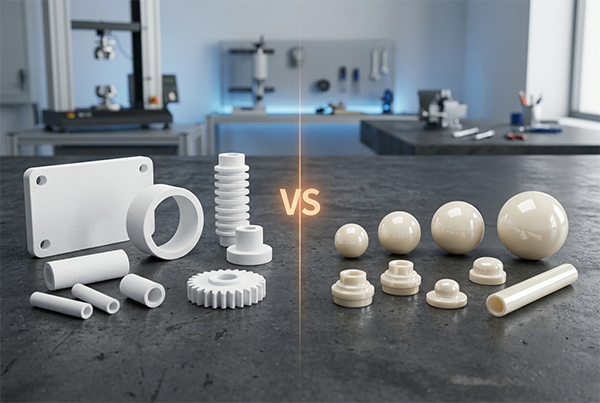 Alumina vs. Zirconia Ceramics: The Engineering Blueprint for Material Selection
This article compares their physical properties, real-world trade-offs, and cost-benefit realities to help you select the right ceramic for your operating environment.
READ MORE >
Alumina vs. Zirconia Ceramics: The Engineering Blueprint for Material Selection
This article compares their physical properties, real-world trade-offs, and cost-benefit realities to help you select the right ceramic for your operating environment.
READ MORE >
 Oxide, Sulfide, or Phosphate? A Supplier's Guide to Solid-State Electrolyte Ceramics
Oxide, sulfide, or phosphate? A practical guide to solid-state electrolyte ceramics from a supplier who handles them daily. Compare LLZO, LATP, and LGPS on conductivity, processing, stability, and real-world viability.
READ MORE >
Oxide, Sulfide, or Phosphate? A Supplier's Guide to Solid-State Electrolyte Ceramics
Oxide, sulfide, or phosphate? A practical guide to solid-state electrolyte ceramics from a supplier who handles them daily. Compare LLZO, LATP, and LGPS on conductivity, processing, stability, and real-world viability.
READ MORE >